
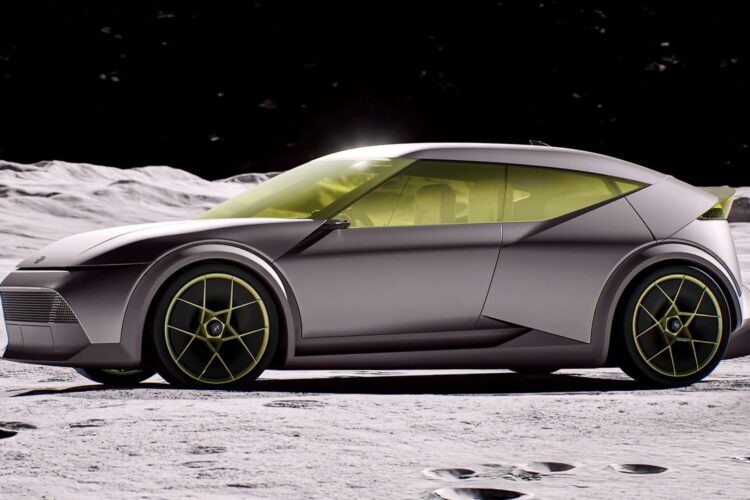
Hyundai’s concept cars have consistently pointed toward one thing: a brand that no longer wants to be predictable. Whether it’s the retro-futuristic N Vision 74 or the latest hyundai concept car reveals at international auto shows, the brand uses these rolling sculptures to stake out its future and show that it isn’t afraid to push design boundaries.
Whether you’re tracking which concepts are heading to production or just curious about Hyundai’s design direction, here’s a comprehensive look at their most significant concept cars – past and present.
Why Hyundai’s Concept Cars Actually Matter
Some automakers build concepts purely as show pieces. Hyundai tends to be more serious about production intent. The Ioniq 5 and Ioniq 6 – two of the most praised EVs in the market – both trace their roots directly back to concept vehicles (the 45 and Prophecy concepts respectively).
That makes Hyundai concepts worth paying attention to. What you see on the show floor often becomes what you’re driving in three to five years.
Key Hyundai Concept Cars and Their Legacy
|
Concept Name |
Debut Year |
Design Theme |
Production Outcome |
|
45 Concept |
2019 |
Heritage-meets-EV, angular retro design |
Became the Ioniq 5 (2021) |
|
Prophecy |
2020 |
Aerodynamic sculpture, no traditional grille |
Became the Ioniq 6 (2022) |
|
Seven Concept |
2021 |
Luxury EV SUV, lounge-like interior |
Became the Ioniq 7 (in development) |
|
N Vision 74 |
2022 |
Rolling Lab: FCEV + rear-wheel hybrid |
No production announced yet |
|
SEVEN |
2021 |
Full-size SUV, spa-inspired cabin |
Ioniq 7 preview |
|
RN22e |
2022 |
Performance EV test vehicle |
Informs Ioniq N line |
N Vision 74: The One That Stole Every Show
If there’s one Hyundai concept that captured the automotive world’s imagination in recent years, it’s the N Vision 74. Revealed at the 2022 Busan Motor Show, it’s a hydrogen fuel cell electric vehicle (FCEV) with rear-wheel drive and a dual powertrain system – part hydrogen, part battery electric.
Visually, it’s a modern reinterpretation of the 1974 Hyundai Pony Coupe Concept (designed by Giorgetto Giugiaro). The boxy yet futuristic silhouette sparked immediate calls for production. Hyundai described it as a “rolling laboratory” – which is corporate speak for “we’re not promising this, but we’re not not promising this either.”
- Powertrain: Hydrogen fuel cell + high-performance battery
- Drive: Rear-wheel drive with multiple electric motors
- Output: Estimated over 670 hp
- 0-100 km/h: Under 4 seconds (estimated)
- Design inspiration: Hyundai Pony Coupe Concept (1974)
Hyundai’s Design Language: Sensuous Sportiness to Parametric Design
Hyundai’s current design era is guided by what they call “Parametric Dynamics” – a language built around sharp, geometric surfaces and pixel-like light signatures. You can see it clearly in the Ioniq 5’s squared-off body and “pixel” LED lights.
Their concept cars push this further – exploring what happens when you remove traditional grilles entirely (Prophecy), or when you design an interior that functions more like a living room than a cockpit (SEVEN).
The interiors in recent Hyundai concepts are particularly forward-thinking:
- Removable center consoles that transform into tables
- Reclining seats that enable a lounge position during autonomous driving
- No traditional dashboard – replaced with floating display screens
- Universal Island – a movable console that adapts to different use modes
EV Architecture Behind the Concepts
All of Hyundai’s recent concept cars sit on the E-GMP (Electric Global Modular Platform), which underpins the Ioniq 5, Ioniq 6, and the upcoming Ioniq 7. Key capabilities of this platform:
|
Feature |
Specification |
|
Battery capacity |
58 kWh to 77.4 kWh (current production) |
|
Charging speed |
800V architecture – 350 kW ultra-fast charging capable |
|
10-80% charge time |
Under 18 minutes (with compatible charger |
|
V2L (Vehicle to Load) |
Power external devices up to 3.6 kW |
|
Range (Ioniq 6 max) |
Up to 610 km WLTP |
What to Expect From Hyundai Concepts in 2025 and Beyond
Hyundai has signaled several directions for upcoming concepts and production vehicles:
- Software-defined vehicles (SDV): Future models will receive features via over-the-air updates, similar to Tesla’s approach
- Hydrogen passenger cars: The N Vision 74 hints at FCEV tech coming to performance vehicles
- Autonomous-ready interiors: The SEVEN concept’s interior previews how Hyundai sees level 4 autonomy changing cabin design
- Heritage design revival: The 45 and N Vision 74 show Hyundai is proud of its design history – expect more retro-future fusions
Final Take
Hyundai’s concepts are more than motor show eye candy. They’re blueprints. The jump from 45 Concept to Ioniq 5 production, and from Prophecy to Ioniq 6, shows a company that follows through on its ideas.
If the N Vision 74 and SEVEN are any indication of where Hyundai is heading, the next five years of Korean automotive design are going to be genuinely exciting – for EV fans and petrolheads alike.