
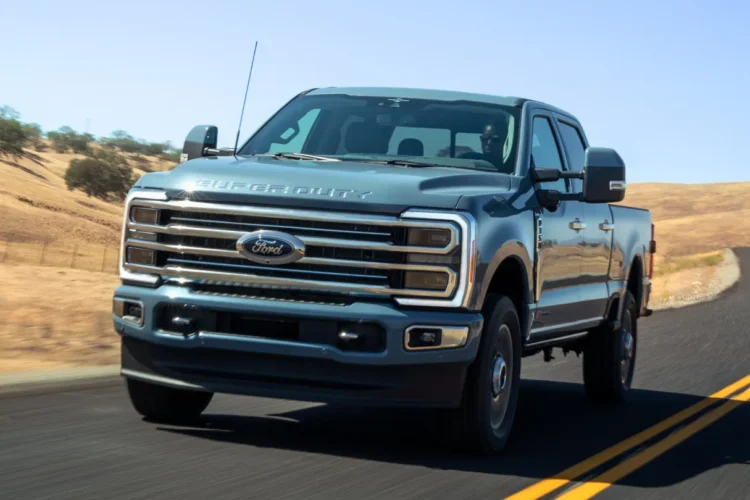
The longest lasting trucks, based on iSeeCars longevity data and real-world owner records, are the Toyota Tacoma, Toyota Tundra, Ford F-150, Chevrolet Silverado 1500, and Ram 1500. The Tacoma stands alone at the top—it has the highest percentage of any vehicle reaching 200,000 miles still in active use, at over 16% of all Tacomas ever sold.
Truck longevity is more than a bragging right – it’s a financial argument. A truck that runs reliably to 250,000 miles at a lower per-mile maintenance cost saves its owner tens of thousands of dollars over two decades compared to a truck requiring major repairs or replacement at 120,000 miles. The trucks below have earned their reputations through real-world use: farms, construction sites, towing, daily driving, and everything in between.
Longest Lasting Trucks – The Rankings
|
Truck |
Best Engine for Longevity |
Avg. Miles (High-Mile Owners) |
% Reaching 200K+ |
Reliability Rating |
|---|---|---|---|---|
|
Toyota Tacoma |
2.7L 4-cyl or 3.5L V6 |
220,000-300,000+ |
16.3% |
Exceptional |
|
Toyota Tundra |
5.7L iForce V8 (2nd gen) |
200,000-280,000 |
12.8% |
Exceptional |
|
Ford F-150 |
5.0L Coyote V8 or 3.5L EcoBoost Gen 2 |
190,000-260,000 |
10.2% |
Very Good |
|
Chevrolet Silverado 1500 |
5.3L EcoTec3 V8 |
185,000-250,000 |
9.6% |
Very Good |
|
Ram 1500 |
3.6L Pentastar V6 or 5.7L HEMI |
180,000-240,000 |
8.4% |
Good |
|
GMC Sierra 1500 |
5.3L EcoTec3 V8 |
180,000-240,000 |
8.1% |
Good |
|
Honda Ridgeline |
3.5L V6 |
170,000-230,000 |
7.2% |
Good |
The Tacoma Story: Why It Became the Benchmark
Ask any mechanic or fleet manager which truck they’d trust with 250,000 miles of use and the answer is almost always the Tacoma. This didn’t happen by accident.
The Tacoma’s longevity comes from a combination of conservative engineering, proven powertrains, and an extraordinarily active owner community that has documented every maintenance procedure and known failure point across multiple generations. Toyota has been willing to build a truck that prioritises durability over horsepower, which is why the Tacoma’s 3.5L V6 makes less power than competitors but consistently outlasts them.
There’s also the parts ecosystem. Tacoma parts are available globally, aftermarket support is massive, and independent mechanics have worked on them for decades. You can get a Tacoma fixed in rural Montana as easily as downtown Houston. That accessibility is worth more than people realise.
Why Specific Engines Make or Break Longevity
Not all engines in the same truck are equal. Engine choice often matters more than brand in determining how long a truck will last:
|
Engine |
Truck |
Known Longevity |
Notes |
|---|---|---|---|
|
5.0L Coyote V8 |
Ford F-150 |
Excellent (230K+) |
Simple, strong, easy to work on |
|
3.5L EcoBoost Gen 2 (2017+) |
Ford F-150 |
Very Good (200K+) |
More complex but well-proven; avoid Gen 1 |
|
5.7L iForce V8 |
Toyota Tundra (2nd gen) |
Excellent (250K+) |
Bulletproof; slightly thirsty but legendary |
|
5.3L EcoTec3 V8 |
Silverado / Sierra |
Very Good (200K+) |
AFM issues in earlier years; disable AFM for longevity |
|
3.6L Pentastar V6 |
Ram 1500 |
Good (190K+) |
Avoid early years (2011-2012); later units reliable |
|
5.7L HEMI V8 |
Ram 1500 |
Very Good (200K+) |
Tick and MDS issues; disable MDS if possible |
|
3.5L V6 |
Toyota Tacoma |
Exceptional (250K+) |
Understressed for its power output; rarely fails |
Maintenance That Makes or Breaks Long-Term Truck Ownership
High-mileage truck owners share a common trait: they maintain obsessively and they catch problems early. The specific maintenance that separates trucks that hit 200K from those that don’t:
- Oil changes every 5,000 miles – even if your truck says 10,000. Trucks work harder than the calculations assume.
- Transmission fluid at 60,000 miles. ‘Lifetime fluid’ is a myth for trucks that tow and haul.
- Transfer case and differential fluids at 30,000-60,000 miles for 4WD trucks. Neglecting this is one of the most common expensive repairs.
- Coolant flush every 5 years. Old coolant corrodes internally and causes expensive failures.
- Undercarriage washing after winter driving. Road salt destroys frames. This is especially critical in northern states.
- Rust treatment on the frame. The 2001-2003 Tacoma had frame rust recalls for a reason – proactive treatment prevents this.
Cost Comparison Over 200,000 Miles
|
Truck |
Fuel (est.) |
Maintenance |
Repair Cost |
Total 200K Cost |
|---|---|---|---|---|
|
Toyota Tacoma (V6) |
$34,000 |
$9,200 |
$5,800 |
$49,000 |
|
Toyota Tundra (5.7L) |
$40,000 |
$10,100 |
$6,400 |
$56,500 |
|
Ford F-150 (5.0L V8) |
$38,000 |
$10,800 |
$7,200 |
$56,000 |
|
Chevy Silverado (5.3L) |
$38,000 |
$11,200 |
$8,400 |
$57,600 |
|
Ram 1500 (5.7L HEMI) |
$40,000 |
$12,400 |
$9,800 |
Note: Fuel estimates assume 18 MPG combined average and $3.50/gallon. Maintenance and repair figures from RepairPal and owner surveys.
What to Look for When Buying a Used Truck
- Frame and undercarriage: Rust here is expensive or terminal. Get under it.
- Transmission slipping or hard shifts: Often the first expensive thing to go on high-mile trucks.
- Oil consumption: Have a compression and leak-down test done on any truck over 150K miles.
- Coolant system: Check for milky oil or white exhaust smoke – signs of head gasket issues.
- Service records: A truck with 180K miles and complete records beats one with 120K miles and none.
Trucks to Avoid for Long-Term Ownership
A few truck configurations have a history of expensive early failures worth knowing about:
- Ford F-150 3.5L EcoBoost Gen 1 (2011-2016): Intercooler condensation, timing chain stretch on high-mileage units. Prefer 2017+ for EcoBoost.
- Ram 1500 3.0L EcoDiesel (1st gen, 2014-2016): Emissions issues and expensive DEF system repairs. Better avoided.
- GMC/Chevy with Active Fuel Management (AFM): The cylinder deactivation system causes lifter failures on many units. Disable or delete AFM if you buy one.
- Nissan Titan: Solid truck but expensive to repair, worse dealer network than domestics or Toyota, and parts availability isn’t as strong.